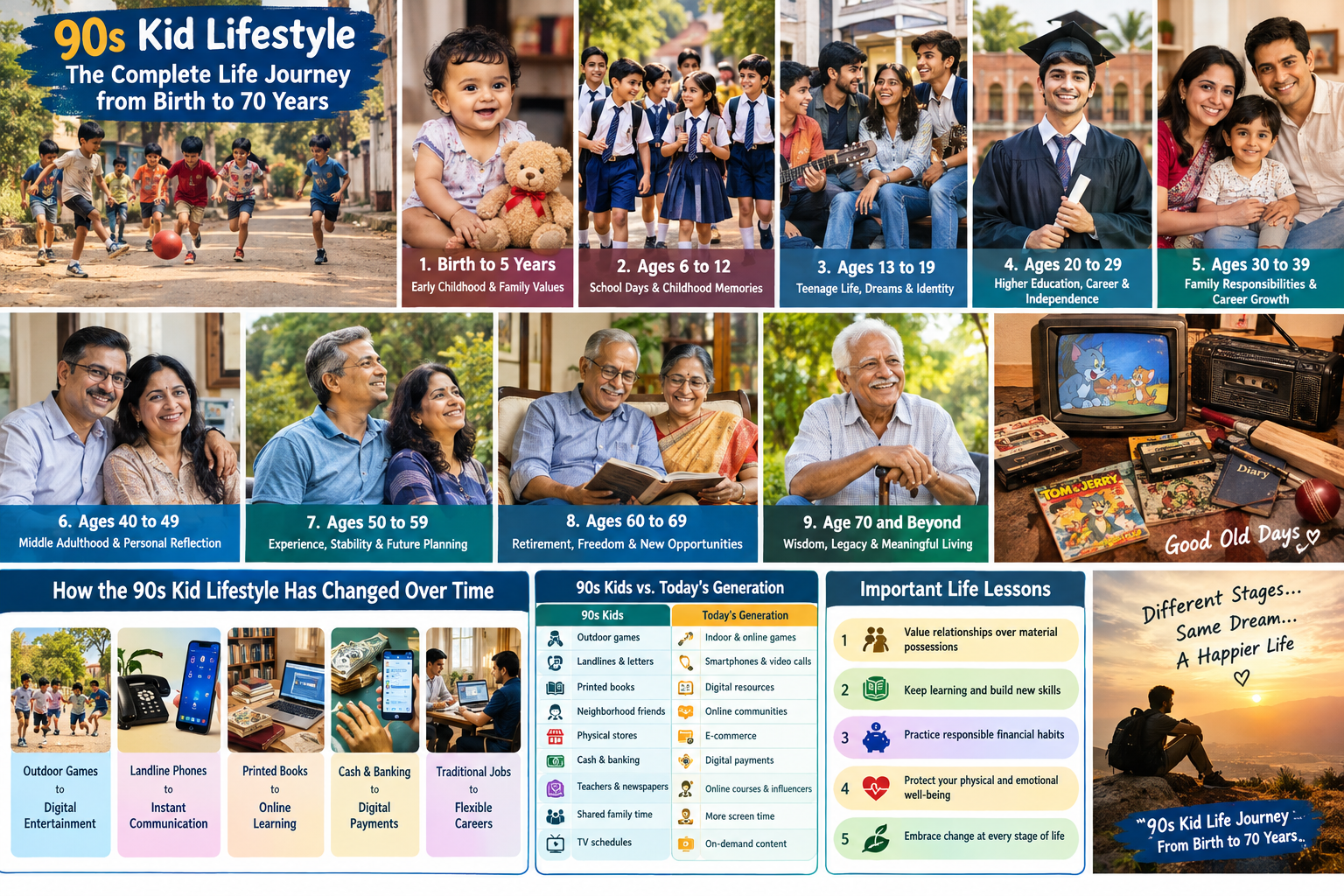
90s Kid Lifestyle: The Complete Life Journey from Birth to 70 Years
Introduction: Understanding the 90s Kid Lifestyle
The 90s kid lifestyle represents a unique generation that experienced childhood during the 1990s, a time when traditional lifestyles and modern technology were beginning to meet. For many people born in the 1990s, childhood was filled with outdoor games, family gatherings, school friendships, handwritten letters, television cartoons, and simple forms of entertainment that created lasting memories.
In India, growing up during the 1990s and early 2000s meant experiencing a world that was significantly different from today’s digital environment. Children often spent hours playing outside, visiting relatives during holidays, listening to stories from grandparents, and enjoying television programs at scheduled times. Mobile phones, social media, and instant internet access were not yet central to everyday childhood for most families.
The life journey of a 90s kid extends far beyond childhood nostalgia. It includes education, teenage experiences, career development, marriage, parenthood, financial responsibilities, middle age, and eventually retirement and life in the senior years.
By exploring the 90s kid life cycle from childhood to 70 years, we can understand how social changes, technology, family values, education, and personal experiences shape different stages of life.
The 90s Kid Life Cycle: From Birth to 70 Years
Every generation experiences life differently. However, people who grew up around the 1990s often share memories of a world that gradually transitioned from predominantly traditional ways of living to an increasingly digital society.
The following stages provide a general overview of the human life journey. Individual experiences vary depending on birth year, culture, family background, economic circumstances, and personal choices.
Stage 1 — Birth to 5 Years: Early Childhood and Family Values
Growing Up in a Traditional Family Environment
The first five years of life are important for physical growth, emotional development, language learning, and the formation of early relationships.
For many Indian children born in the 1990s, early childhood involved spending considerable time with parents, grandparents, siblings, and other relatives. In joint families, children often grew up surrounded by several generations, learning everyday habits through observation and interaction.
Grandparents frequently shared traditional stories, folk tales, cultural practices, and family histories. Simple activities such as playing with household objects, listening to music, watching television with family members, and exploring the neighborhood helped children understand their surroundings.
Childhood Entertainment Before Smartphones
Entertainment during the 1990s was generally less dependent on personal digital devices. Children enjoyed toys, picture books, drawing, singing, and playing with friends.
Television programs, animated shows, and children’s films became memorable parts of childhood for many families. In India, the availability of television varied by location and household income, but television gradually became an important source of entertainment.
Key memories of early childhood:
- Spending time with parents and grandparents.
- Learning the first words, songs, and stories.
- Playing with traditional toys and household objects.
- Celebrating birthdays and family festivals.
- Developing friendships with neighborhood children.
- Learning basic manners, language, and family traditions.
These early experiences created the foundation for emotional security, social interaction, and lifelong memories.
Stage 2 — Ages 6 to 12: School Days and Unforgettable Childhood Memories
The Joy of School Life in the 90s
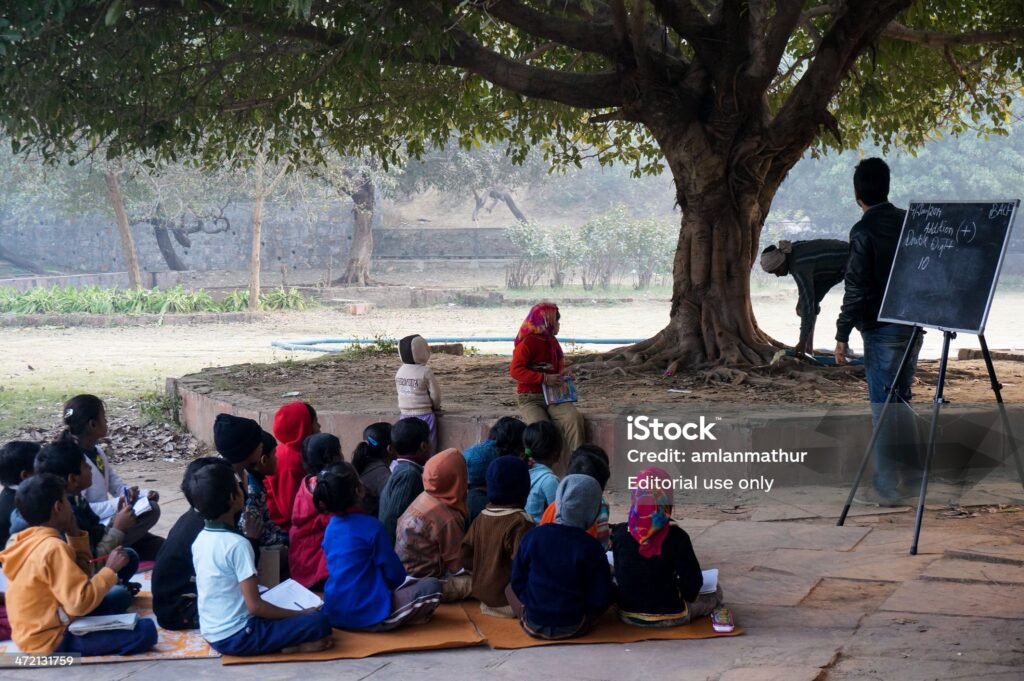
For many 90s kids, primary school was a major part of everyday life. School bags, notebooks, pencils, textbooks, uniforms, lunch boxes, and friendships became familiar elements of the daily routine.
Children learned mathematics, languages, science, social studies, and other subjects while developing discipline and social skills. Teachers often played an important role in shaping behavior, encouraging participation, and helping students discover their interests.
School life was not limited to classroom learning. Annual celebrations, sports days, cultural programs, drawing competitions, examinations, and school excursions gave children opportunities to explore their abilities.
Outdoor Games and Neighborhood Friendships
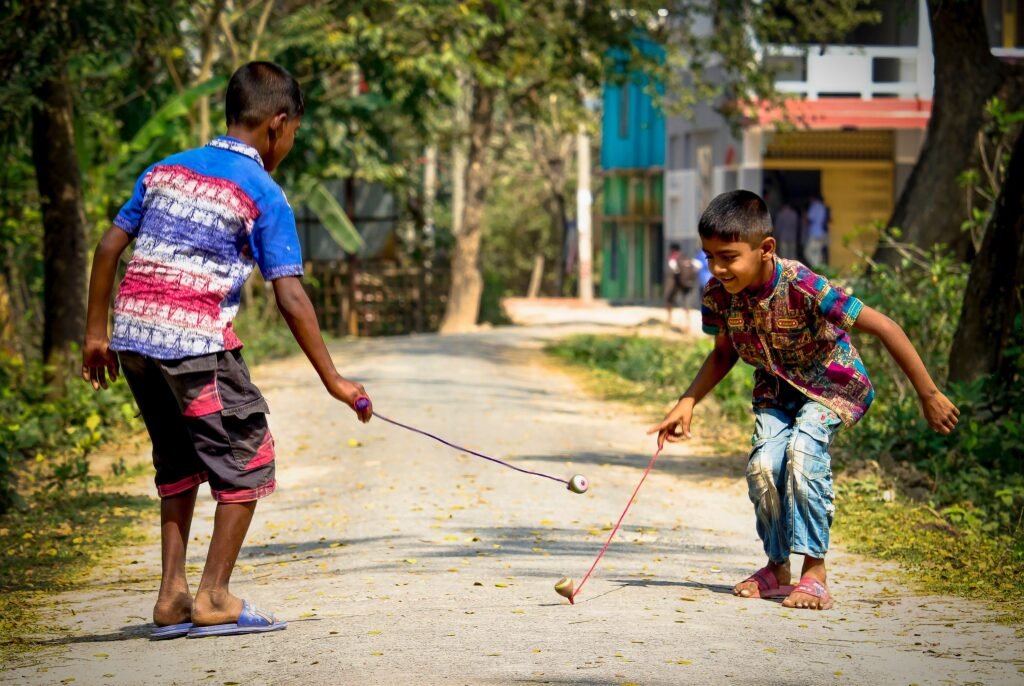
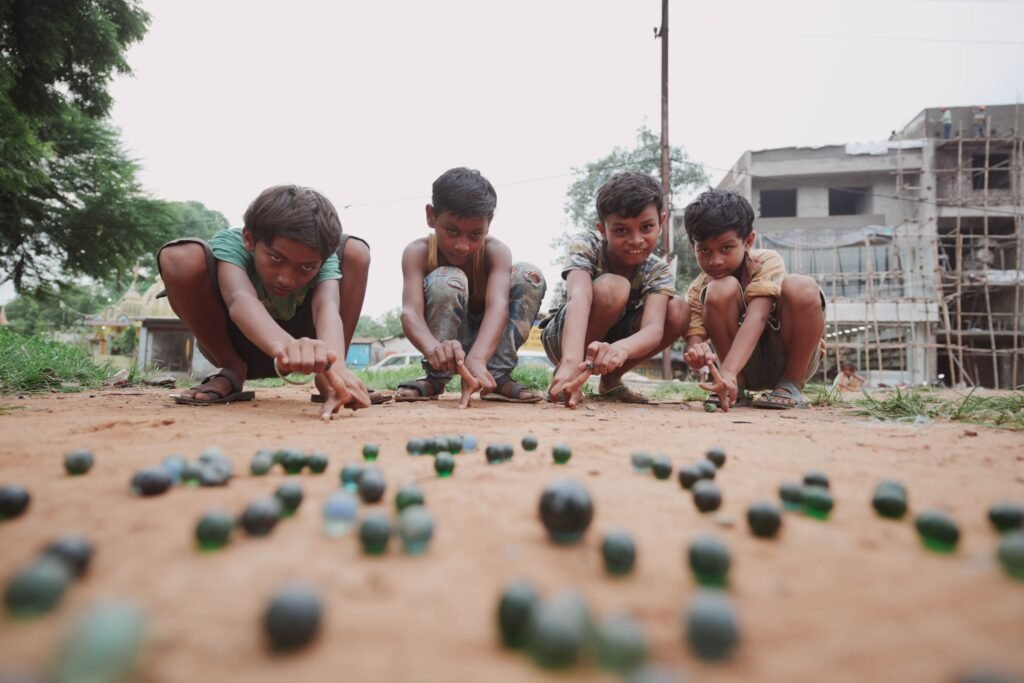
One of the most memorable features of the 90s kid lifestyle was outdoor play.
Depending on the region and local community, children enjoyed games such as cricket, football, badminton, kabaddi, kho-kho, hide-and-seek, hopscotch, and cycling.
Unlike today’s children, who may spend substantial leisure time on smartphones and gaming devices, many children in the 1990s had fewer opportunities for personal digital entertainment. Outdoor games were therefore an important part of daily recreation in many communities.
These activities encouraged teamwork, physical movement, problem-solving, patience, and communication.
Family Values and Social Relationships
Family relationships were central to childhood for many people growing up during this period. Visiting relatives, attending weddings, celebrating festivals, and participating in community events helped children develop a sense of belonging.
In many Indian households, children learned to respect elders, share responsibilities, help younger siblings, and participate in family traditions.
Important experiences during ages 6–12:
- Building lifelong friendships at school.
- Playing outdoor games after school.
- Reading storybooks and comics.
- Watching favorite television programs.
- Enjoying summer holidays with relatives.
- Participating in cultural festivals.
- Learning responsibility, teamwork, and respect.
These experiences often become some of the most cherished memories of the 90s generation.
Stage 3 — Ages 13 to 19: Teenage Life, Dreams, and Identity
The Challenges of Teenage Life
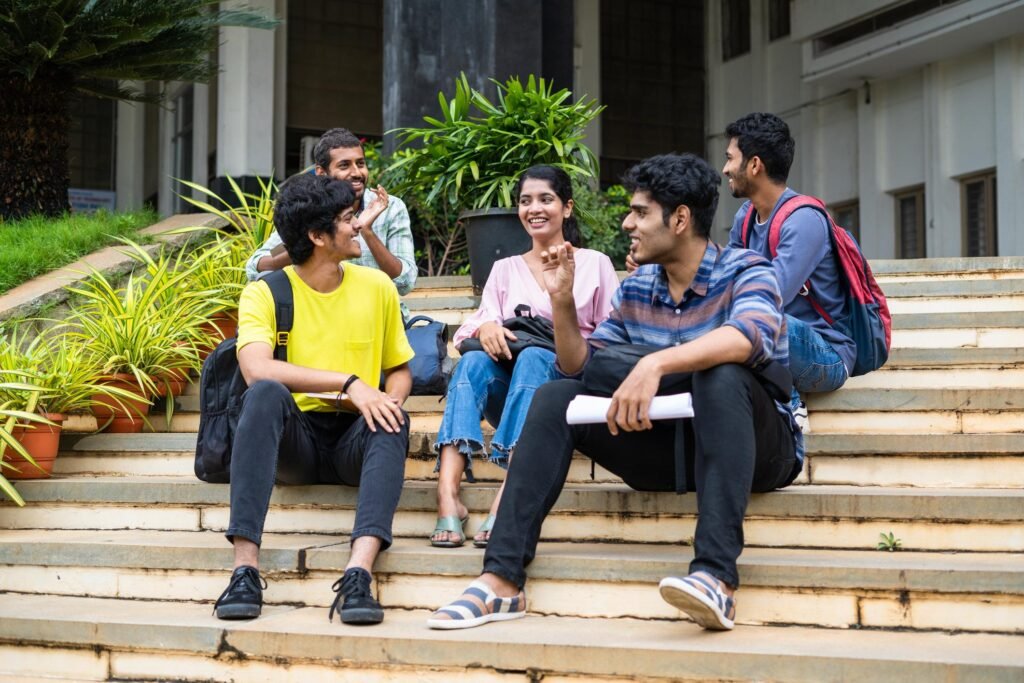
The teenage years are a period of physical, emotional, and social change. During this stage, young people begin developing stronger personal opinions, exploring their identities, and thinking about their future.
For 90s kids, teenage life often involved balancing school examinations, family expectations, friendships, hobbies, and career ambitions.
Many students faced pressure to achieve good academic results because education was widely viewed as an important route toward professional opportunities and financial stability.
Entertainment, Music, and Popular Culture
Music, movies, television, magazines, sports, and conversations with friends shaped teenage entertainment.
Depending on household resources and location, teenagers listened to music through radios, cassette players, and later CDs or digital devices. Film songs, cricket matches, television serials, and popular actors influenced fashion and social conversations.
Some teenagers enjoyed reading newspapers, collecting photographs of favorite celebrities, watching sports, or learning practical skills outside school.
As teenagers approached adulthood, education and career planning became increasingly important.
Students considered different options, including university degrees, vocational education, commerce, science, arts, engineering, medicine, teaching, government employment, and business.
Access to career guidance and technology varied significantly. Before online learning became widespread, students often depended on teachers, family members, books, newspapers, coaching centers, and personal networks for information.
The teenage years therefore became a time for developing ambition, resilience, and a clearer understanding of personal strengths.
Stage 4 — Ages 20 to 29: Higher Education, Career, and Independence
Entering the Adult World
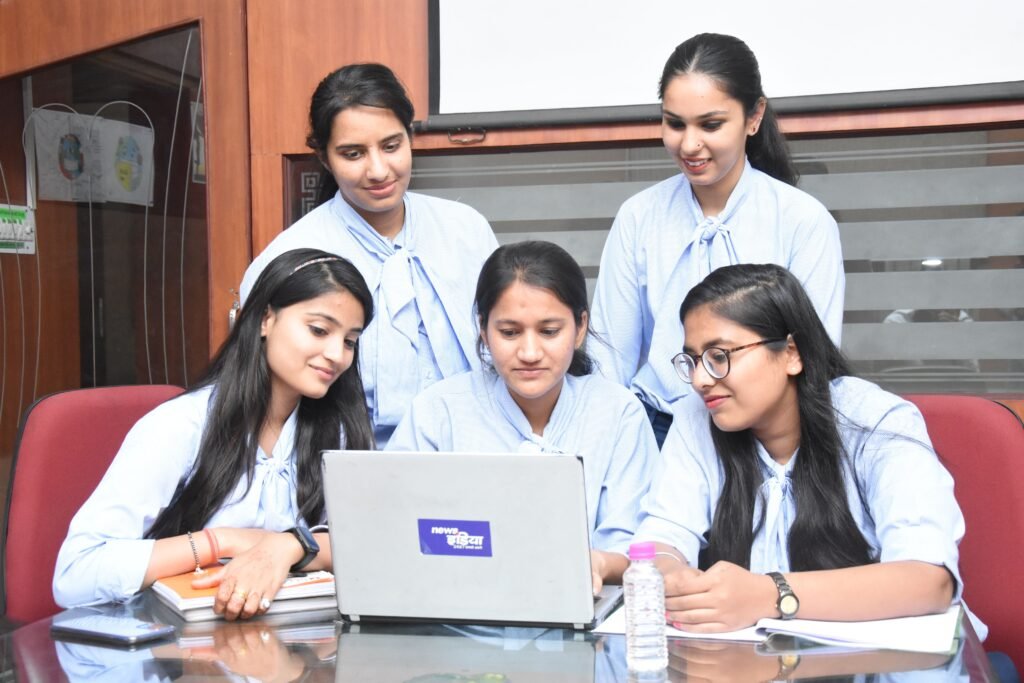
The twenties are often associated with higher education, employment, independent decision-making, and the transition from student life to professional responsibilities.
For people born in the 1990s, this stage frequently overlapped with the rapid expansion of smartphones, affordable internet services, online communication, and digital employment opportunities.
Many young adults who began their education using traditional books and classroom teaching later adapted to online applications, digital payments, video calls, social media, and internet-based learning.
This transition made the 90s generation familiar with both traditional communication methods and modern digital tools.
Career Development and Financial Independence
Starting a career is an important milestone, but the experience differs widely from person to person.
Some young adults enter salaried employment, while others pursue competitive examinations, professional qualifications, family businesses, entrepreneurship, or freelance work.
The twenties are also an appropriate time to develop financial habits, including budgeting, emergency savings, responsible borrowing, and long-term financial planning.
Learning practical skills such as communication, computer literacy, digital marketing, accounting, programming, or business management can help people adapt to changing employment opportunities.
Relationships, Marriage, and Personal Decisions
During their twenties, some people choose marriage and parenthood, while others prioritize education, travel, career development, or personal goals.
In India, marriage decisions may involve individual preferences, family expectations, cultural traditions, and financial considerations.
There is no single correct timeline for these milestones. Personal circumstances and priorities differ, and a fulfilling adult life does not require everyone to follow the same sequence.
Major developments during ages 20–29 may include:
- Completing higher education or vocational training.
- Finding employment or starting a business.
- Learning to manage personal finances.
- Developing lasting relationships.
- Exploring interests and professional goals.
- Adapting to smartphones and digital services.
- Making independent life decisions.
Stage 5 — Ages 30 to 39: Family Responsibilities and Career Growth

Balancing Professional and Personal Life
For many people, the thirties bring increased professional responsibilities and a stronger focus on long-term stability.
Some establish families, raise children, purchase homes, or take on additional responsibilities toward parents and relatives. Others concentrate on career advancement, entrepreneurship, education, or personal development.
The challenge is often to balance several priorities without neglecting physical health, emotional well-being, or important relationships.
Financial Planning and Long-Term Security
The thirties can be a useful period for reviewing financial goals.
Depending on income and family circumstances, people may work toward building an emergency fund, reducing expensive debt, obtaining suitable insurance, saving for children’s education, or planning for retirement.
Responsible financial planning involves understanding household expenses, distinguishing essential purchases from optional spending, and avoiding financial decisions based solely on social pressure.
It is equally important to recognize that not everyone reaches the same financial milestones at the same age. Income, employment opportunities, caregiving duties, and unexpected expenses all influence progress.
Health, Fitness, and Lifestyle Changes
As responsibilities increase, maintaining healthy routines can become more challenging.
Regular physical activity, balanced nutrition, adequate sleep, preventive healthcare, and meaningful social relationships contribute to long-term well-being.
People who spent their childhood playing outdoors may find it helpful to maintain active habits as adults, even when work and family responsibilities reduce their available free time.
The thirties are an opportunity to build sustainable routines rather than postpone health and personal interests indefinitely.
Stage 6 — Ages 40 to 49: Middle Adulthood and Personal Reflection

Evaluating Career and Life Achievements
The forties can be a period of professional maturity and personal reflection.
Many people have accumulated years of experience in their chosen fields. They may take on leadership responsibilities, manage teams, expand businesses, mentor younger colleagues, or consider a new professional direction.
Others may reassess their careers after facing job changes, business difficulties, family responsibilities, or changing personal interests.
Life experience can help people distinguish between externally imposed expectations and goals that genuinely matter to them.
Supporting Children and Aging Parents
Family responsibilities may change significantly during middle adulthood.
Some people support children through education while also helping aging parents with everyday needs, healthcare appointments, or financial decisions.
This combination of responsibilities can create emotional and practical challenges. Open communication among family members, realistic budgeting, and sharing caregiving duties can make these demands more manageable.
Reconnecting With Old Friends and Childhood Memories
Nostalgia often becomes meaningful as people reflect on earlier stages of life.
Meeting school friends, revisiting childhood neighborhoods, looking through old photographs, and sharing memories with siblings can strengthen social connections.
For the 90s generation, these moments may also highlight the dramatic changes in technology, communication, education, and entertainment that have occurred during their lifetimes.
However, nostalgia does not mean that the past was perfect. Every period had its own difficulties, and modern conveniences have created many genuine benefits.
The value of remembering the past lies in appreciating meaningful experiences while continuing to adapt to the present.
Stage 7 — Ages 50 to 59: Experience, Stability, and Future Planning
Using Experience to Make Better Decisions
The fifties can offer opportunities to apply decades of professional and personal experience.
Some people reach senior positions in their organizations, operate established businesses, support younger family members, or contribute to community activities.
Others begin planning career transitions, preparing for retirement, or developing interests they previously had little time to pursue.
Experience can support better decision-making, although remaining open to new ideas and changing circumstances is equally important.
Preparing Financially for Retirement
Retirement planning becomes increasingly relevant as people approach their later working years.
A practical retirement plan may include reviewing savings, estimating future household expenses, understanding pension entitlements, managing outstanding debts, and considering healthcare costs.
The appropriate approach depends on income, family commitments, existing assets, expected retirement age, and personal risk tolerance.
It is useful to review financial arrangements periodically rather than assume that one plan will remain suitable forever.
Protecting Health and Social Connections
Maintaining physical activity, attending recommended health screenings, getting sufficient rest, and staying socially connected can support healthy aging.
Friendships, hobbies, community involvement, and family relationships may become especially valuable as professional responsibilities change.
The fifties are not simply a preparation period for retirement. They can also be a time for continued learning, travel, creativity, and personal achievement.
Stage 8 — Ages 60 to 69: Retirement, Freedom, and New Opportunities
Adjusting to Retirement
Retirement represents a major transition for people whose daily routines have been shaped by employment for many years.
For some, retirement provides more time for family, travel, gardening, reading, religious or cultural activities, volunteering, and hobbies. For others, it brings financial concerns or a temporary loss of routine and professional identity.
A fulfilling retirement often benefits from a combination of structure, social interaction, physical activity, and personally meaningful activities.
People who continue working beyond traditional retirement ages may also find purpose in consulting, teaching, mentoring, or managing family businesses.
Spending Meaningful Time With Family
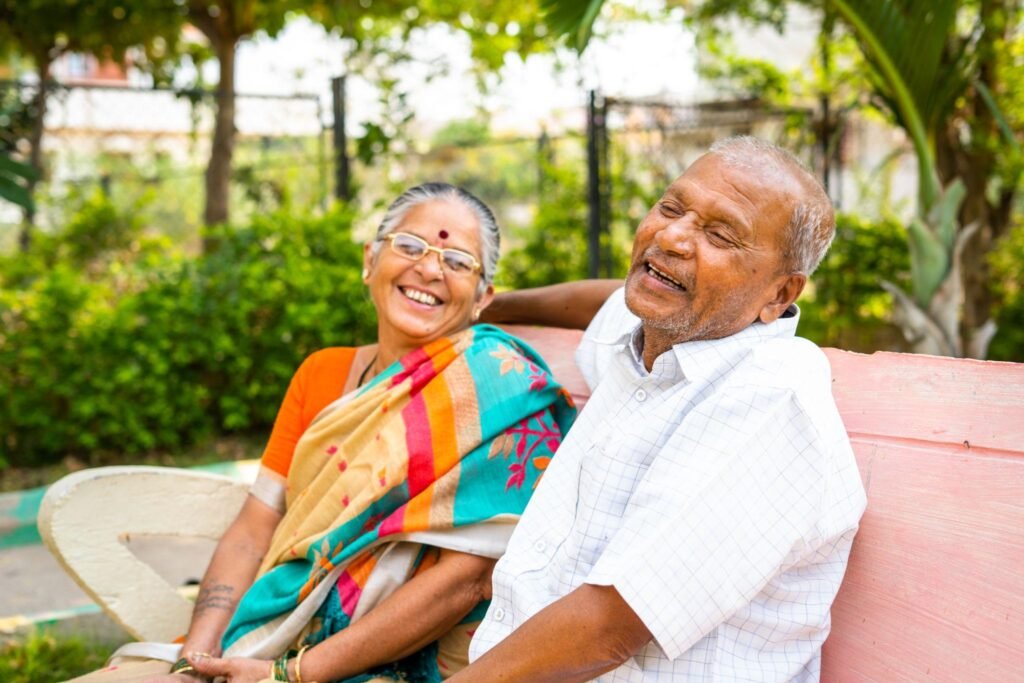
For many people, later adulthood offers more opportunities to connect with children, grandchildren, siblings, and old friends.
Sharing family history, preparing traditional recipes, teaching practical skills, and discussing childhood experiences can strengthen relationships between generations.
Grandparents may play an important role in passing on cultural traditions and family stories, although family arrangements and individual preferences vary.
Staying Active and Independent
Healthy aging is influenced by a combination of medical care, physical activity, nutrition, social relationships, accessible living environments, and personal circumstances.
Walking, appropriate strength and balance exercises, mentally engaging hobbies, and regular contact with friends can contribute to well-being.
It is also important to plan for practical needs, including accessible housing, transportation, medication management, and financial security.
The sixties can be a rewarding stage of life when people have opportunities to remain engaged, make independent choices, and pursue meaningful interests.
Stage 9 — Age 70 and Beyond: Wisdom, Legacy, and Meaningful Living
Appreciating the Journey of Life
Reaching the age of 70 represents a significant milestone, although experiences at this age differ greatly.
Some people remain physically active and professionally engaged, while others require assistance with daily activities or healthcare. Personal health, living conditions, family support, and access to services all influence later life.
For people who grew up during the 1990s, reaching 70 will occur at different calendar dates depending on their birth year. A person born in 1990 turns 70 in 2060, while someone born in 1999 turns 70 in 2069.
The important point is not to assume that everyone experiences old age in the same way, but to recognize the value of dignity, independence, and appropriate support.
Passing Knowledge to Younger Generations
Older adults can contribute to family and community life through their knowledge, experiences, and relationships.
They may share lessons about work, relationships, family traditions, financial responsibility, resilience, and social change.
Their memories can also help younger generations understand how everyday life has changed across decades.
At the same time, meaningful relationships require listening and mutual respect. Younger people bring their own knowledge, experiences, and perspectives, creating opportunities for learning in both directions.
Finding Happiness in Simple Things
Later adulthood can encourage people to reconsider what makes life meaningful.
For some, happiness comes from spending time with family. For others, it comes from friendships, creative activities, community participation, spiritual practices, nature, or simply enjoying a peaceful daily routine.
There is no universal formula for a fulfilling life at 70. The goal is to preserve dignity, maintain meaningful connections, and make the most of the opportunities available.
How the 90s Kid Lifestyle Has Changed Over Time
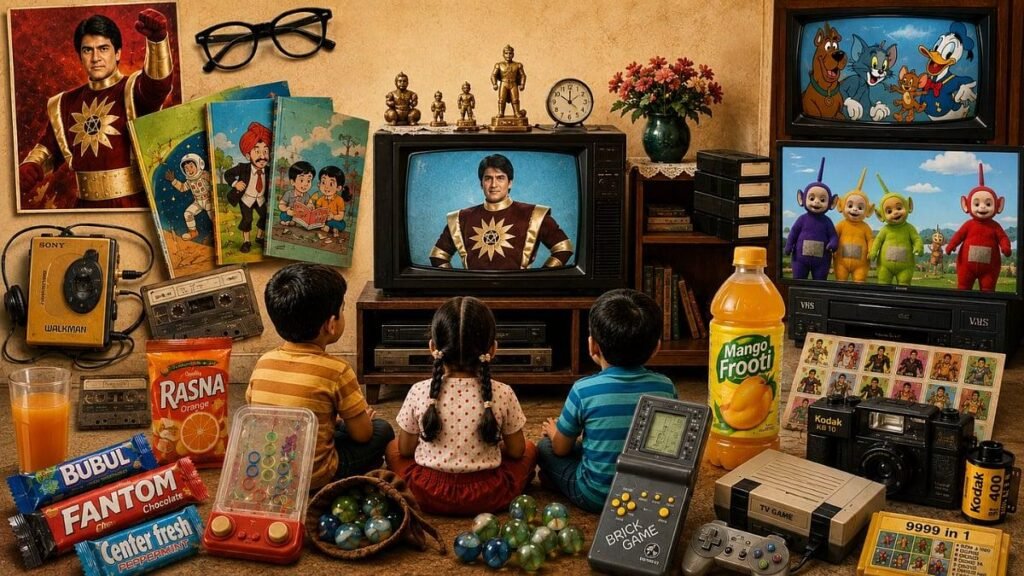
The lifestyle of people who grew up during the 1990s has changed considerably as technology, work, education, and social expectations have evolved.
1. From Outdoor Games to Digital Entertainment
Outdoor play was a familiar part of childhood for many 90s kids. Today, children have access to smartphones, gaming consoles, streaming platforms, and online entertainment.
Digital entertainment offers opportunities for learning and creativity, but maintaining a healthy balance between screen time, physical activity, and face-to-face interaction remains important.
2. From Landline Phones to Instant Communication
Earlier generations often relied on landline phones, handwritten letters, and in-person visits. Mobile phones and messaging applications have made communication faster and more convenient.
Families and friends can now maintain relationships across long distances, although digital communication does not completely replace the value of personal interaction.
3. From Printed Books to Online Learning
Textbooks, libraries, newspapers, and classroom teaching were important learning resources for many students growing up in the 1990s.
Today, online courses, digital libraries, educational videos, and virtual classrooms offer additional ways to acquire knowledge.
These changes have expanded learning opportunities, although access to reliable internet, suitable devices, and quality instruction remains unequal.
4. From Traditional Banking to Digital Payments
Many adults who grew up during the 1990s witnessed the development of internet banking, mobile banking, and digital payment systems.
In India, digital payments have made many everyday transactions faster and more accessible. However, financial literacy, fraud awareness, privacy protection, and responsible account management remain essential.
5. From Traditional Employment to Flexible Careers
Employment opportunities have also changed.
Alongside conventional salaried jobs, many people now explore remote work, freelancing, e-commerce, content creation, and digital services.
These options can provide flexibility, but income stability, competition, skill requirements, and business expenses should be considered carefully.
90s Kids vs. Today’s Generation: A Lifestyle Comparison
The comparison below highlights broad differences in common experiences, rather than suggesting that every person in either generation lived the same way.
| Lifestyle Area | Many 90s Childhood Experiences | Common Experiences Today |
|---|---|---|
| Entertainment | Television, outdoor games, books | Streaming, gaming, social media |
| Communication | Landlines, letters, in-person visits | Smartphones, messaging, video calls |
| Education | Printed textbooks and classroom learning | Digital resources and blended learning |
| Friendships | Neighborhood play and school meetings | In-person and online communities |
| Shopping | Physical stores and local markets | Physical stores and e-commerce |
| Payments | Cash and traditional banking | Cash, cards, and digital payments |
| Career discovery | Teachers, newspapers, personal networks | Online courses, professional networks, digital platforms |
| Family interaction | Often centered on shared household routines | A mixture of in-person and digital communication |
| Entertainment access | Often limited by television schedules and local facilities | On-demand content and online platforms |
Both generations have advantages and challenges. Earlier lifestyles sometimes encouraged spontaneous outdoor interaction, while modern technology provides easier access to information, communication, and specialized learning resources.
The most useful approach is to retain valuable habits from the past while making thoughtful use of modern opportunities.
Important Life Lessons From the 90s Generation
The experiences associated with growing up in the 1990s offer several lessons that remain relevant today.
1. Value Relationships More Than Material Possessions
Meaningful relationships are built through trust, time, communication, and mutual support. Expensive possessions cannot replace the emotional value of reliable friendships and family connections.
2. Develop Skills Throughout Life
Meaningful relationships are built through trust, time, communication, and mutual support. Expensive possessions cannot replace the emotional value of reliable friendships and family connections.
2. Develop Skills Throughout Life
Technology and employment requirements continue to change. Lifelong learning helps people adapt, explore new opportunities, and remain engaged at different ages.
3. Build Responsible Financial Habits
Budgeting, saving, managing debt, understanding insurance, and planning for future expenses can improve financial resilience.
Financial decisions should reflect actual income, family responsibilities, and realistic goals rather than comparisons with other people.
4. Protect Physical and Emotional Well-Being
Regular activity, adequate sleep, healthy relationships, preventive healthcare, and time for relaxation are important throughout life.
Seeking appropriate support during difficult periods is a sign of practical self-care, not personal weakness.
5. Accept That Every Stage of Life Brings Change
Childhood, adolescence, adulthood, middle age, and later life involve different opportunities and responsibilities.
A satisfying life does not require reaching every milestone at a particular age. Personal growth often involves adjusting expectations, learning from mistakes, and discovering new sources of purpose
Frequently Asked Questions About the 90s Kid Lifestyle
What does 90s kid lifestyle mean?
The term 90s kid lifestyle generally describes the childhood experiences, entertainment, family routines, social relationships, and cultural influences associated with growing up during the 1990s. The meaning varies depending on the country, birth year, and family background.
What are the most memorable things about being a 90s kid?
Common memories include outdoor games, school friendships, television cartoons, family gatherings, summer holidays, printed books, cassette players, and spending time with neighborhood friends. Not every 90s kid experienced all these activities, but they are familiar themes in many nostalgic accounts.
How is the 90s generation different from today’s generation?
Many people who grew up in the 1990s experienced the transition from predominantly traditional communication and entertainment to smartphones, social media, digital payments, and online learning. Today’s children often encounter these technologies from a much younger age.
What challenges do 90s kids face as adults?
Challenges vary, but may include career competition, rising living expenses, family responsibilities, financial planning, changing technology, and balancing work with personal well-being. These challenges are not unique to the 90s generation, although the timing and circumstances can differ.
How can 90s kids preserve their childhood memories?
People can preserve memories by organizing old photographs, recording family stories, reconnecting with school friends, collecting memorabilia, writing personal histories, and sharing childhood experiences with younger generations.
What does life look like for a 90s kid at age 70?
It depends on the person’s birth year and circumstances. For example, someone born in 1990 will turn 70 in 2060. At that stage, they may be retired, working, pursuing hobbies, spending time with family, or managing health and mobility needs. There is no single path through later life.
Is the 90s kid lifestyle better than the modern lifestyle?
Neither lifestyle is universally better. Childhood in the 1990s may be remembered for outdoor play and direct social interaction, while modern life offers easier access to information, digital communication, and educational resources. A balanced lifestyle can combine the strengths of both.
Conclusion — Celebrating the 90s Kid Life Journey From Birth to 70 Years
The 90s kid lifestyle represents more than a collection of nostalgic childhood memories. It reflects a journey through changing family relationships, education, entertainment, employment, technology, and social expectations.
From the first years of childhood to school friendships, teenage dreams, career development, family responsibilities, middle adulthood, retirement, and life at 70, every stage contributes to a person’s individual story.
People who grew up during the 1990s have experienced a remarkable period of technological and social transformation. Many have seen communication evolve from landline phones to instant messaging, entertainment move from scheduled television to streaming, and traditional services expand into digital platforms.
Yet some of life’s most important values remain consistent across generations: kindness, responsibility, meaningful relationships, learning, resilience, and respect for others.
The real value of reflecting on the life journey is not to prove that one generation lived better than another. It is to understand how experiences shape us, appreciate the lessons of the past, and use those lessons to build a healthier and more meaningful future.
Every age has its own beauty, every generation has its own story, and every stage of life offers another opportunity to learn, grow, and create lasting memories.